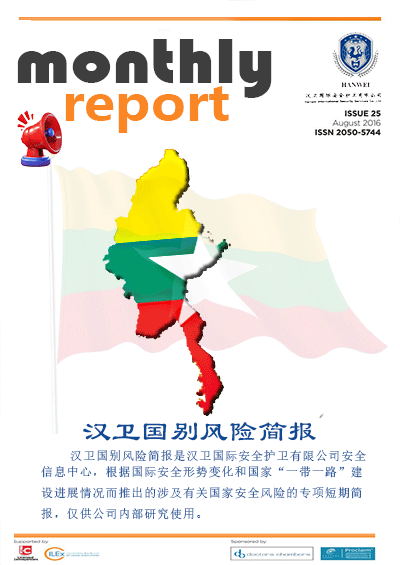
Myanmar March Monthly Risk Report
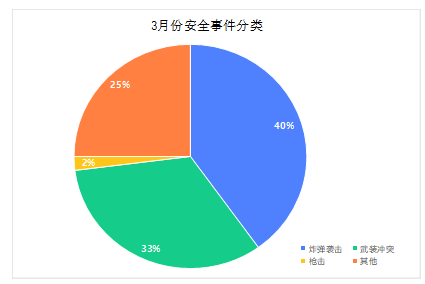
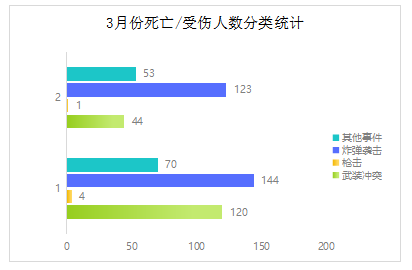
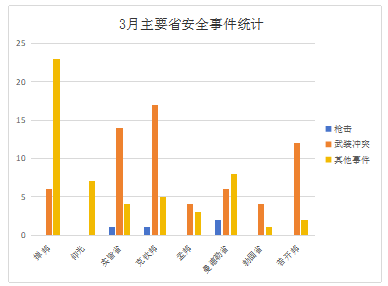
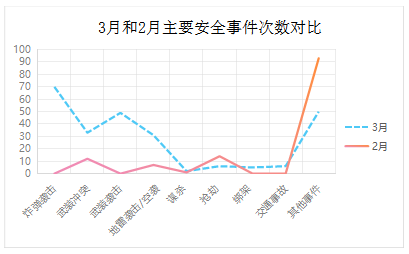
According to Hanwei International security public opinion monitoring, a total of 252 representative security incidents of various types were recorded across Myanmar in March, an increase of 123 compared with February. These incidents caused 340 deaths and 221 injuries. By category, security events were dominated by armed conflicts and bomb attacks, mainly concentrated in Sagaing Region and Shan State.
Political Leadership Election Progress
On March 16, the First Session of the Third Pyithu Hluttaw (House of Representatives) convened for the first time since the military takeover. Khin Yi, Chairman of the Union Solidarity and Development Party (USDP), was elected as the new Speaker of the Pyithu Hluttaw. Myanmar’s parliament held its first plenary meeting in more than five years, consolidating the military’s continued firm grip on state power. Published photos showed around one quarter of attending legislators in military uniform, as one quarter of parliamentary seats are government-appointed.
U Aung Lin Dwe, Speaker of the Union Parliament, announced that the presidential and vice presidential election would be held on March 30, entering the final countdown for national leadership reshuffle. Nominees for Vice President proposed by various groups were submitted to the Parliament Speaker for formal election procedures.
On March 31, elected civilian parliamentary groups and military-appointed delegations of the Pyithu Hluttaw and Amyotha Hluttaw respectively elected Min Aung Hlaing, Nan Ni Ni Aye and Nyo Saw as Vice Presidents.
International Exchanges and Cooperation
The celebration month marking the 10th anniversary of Lancang-Mekong Cooperation (LMC) was launched in Nay Pyi Taw on March 5. Attendees included Than Swe, Member of Myanmar’s National Security and Peace Commission and Minister of Foreign Affairs, other Myanmar government officials, Ma Jia, Chinese Ambassador to Myanmar, as well as diplomatic envoys and representatives from multiple countries. Than Swe stated that under the guidance of leaders from the six LMC countries, fruitful achievements have been made across all fields, making LMC one of the most successful Mekong regional mechanisms. He expressed sincere gratitude for China’s support and looked forward to greater accomplishments in future cooperation. Ambassador Ma Jia noted that over the past decade, the six Lancang-Mekong countries have steadily advanced the building of a community with a shared future, contributing greatly to regional development and common prosperity.
On March 11, Sun Weidong, Vice Minister of Foreign Affairs, met with Zaw Win Myint, newly appointed Myanmar Ambassador to China. Sun Weidong welcomed Zaw Win Myint to assume his new post in China, stating that China and Myanmar are close neighbors, good friends, reliable partners and kindred spirits sharing weal and woe. Guided by the Five Principles of Peaceful Coexistence, bilateral friendly relations continue to deepen. China supports Myanmar in safeguarding national sovereignty, independence and unity, pursuing a development path suited to its national conditions and endorsed by its people, and advancing post-earthquake reconstruction and stable development.
On the evening of March 27, Myanmar’s 81st Armed Forces Day military parade was held at the parade ground in Nay Pyi Taw. Formations and military equipment assembled in order at the Thida Parade Ground before marching in formation for the ceremony.
Fuel Shortage and Central Bank Forex Injection
Escalating conflicts in the Middle East drove international crude oil prices above USD 100 per barrel in March 2026, with Brent crude hitting a peak of USD 119, triggering severe fuel shortages in Myanmar. A prolonged Middle East conflict may push energy prices higher for an extended period, driving up production costs and potentially spilling over into core inflation (inflation excluding volatile energy and food prices). Myanmar’s Central Bank continued injecting foreign currencies including US dollars and Thai baht into the market to stabilize the Myanmar kyat.
On March 13, the handover ceremony of the China-Myanmar Friendship Market was held in Sagaing Region. Ambassador Ma Jia, U Mya Kyaw, Chief Minister of Sagaing Region, Liu Ming, President of the Myanmar-China Chamber of Commerce, together with over 150 local officials and residents attended the event. Ambassador Ma Jia remarked that the market serves as a small yet high-quality livelihood project supporting Sagaing’s post-earthquake reconstruction, expecting sustainable operation to benefit local people long-term. The Chinese Embassy and Chinese enterprises in Myanmar will continue promoting more livelihood projects in the country.
On March 16, Myanmar Investment Commission (MIC) held its third meeting of 2026, approving 35 new investment projects in one batch, with a total investment of 41 million US dollars and 1.95 trillion Myanmar kyat, expected to create 5,064 direct local jobs. It represents one of the largest concentrated investment approvals this year, sending a clear signal of stabilizing employment via investment and boosting economic recovery through industrial development.
To support increased fuel imports, Myanmar’s Central Bank sold 45 million US dollars to fuel importers via designated banks on March 23 to meet market demand. In addition, the Central Bank planned to sell 50 million Thai baht to importers through the FX Trading Platform according to market needs.
On March 25, authorities encouraged citizens to reduce vehicle usage and celebrate the Water Festival with pedestrian-style celebrations along city moats. Water Festival events will be held in townships including Aungmyethazan, Mahaaungmye, Kyaukse, Meiktila and Amarapura in Mandalay Region. Solar and electric water pumps will replace fuel-powered equipment to supply festival water along moat areas. Traffic restrictions will be imposed with vehicle bans on 26th Street and 66th Street.
Severe Livelihood Insecurity
Military Town Seizures and Widespread Armed Clashes
Emergency Contact Numbers
Global Emergency Call Center for Consular Protection and Services of China (24-hour): 0086-10-12308 / 0086-10-65612308