Myanmar Monthly Risk Report‑May
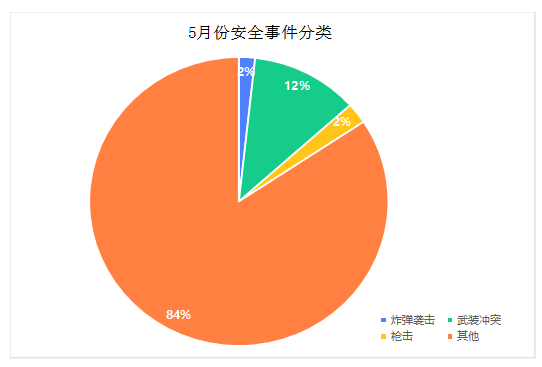
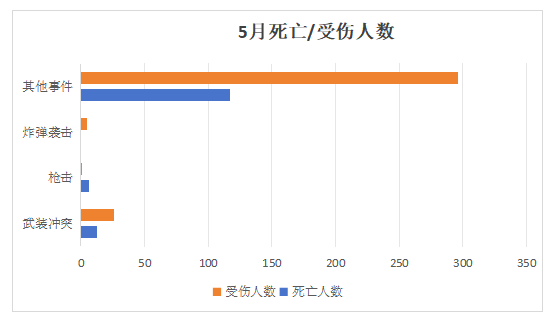
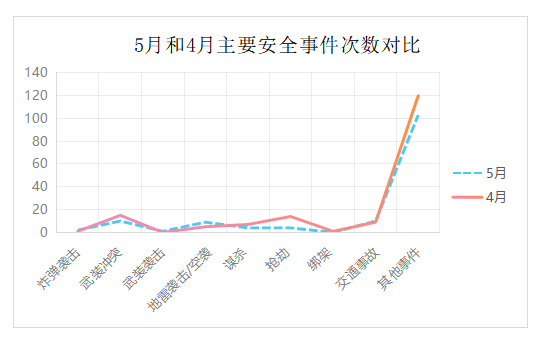
According to security public‑opinion monitoring reports from Hanwei International, a total of 172 representative security incidents were recorded across Myanmar in May, an increase of 29 compared with April. These security incidents caused 136 fatalities and 328 injuries. Among classified security categories, armed conflicts and robberies predominated. Incidents were mainly concentrated in Shan State, Yangon and other locations.
May 2026 marked a critical adjustment phase for Myanmar following the formation of its new government. Having transitioned from leader of the military junta to elected President, Min Aung Hlaing faces domestic ethnic conflicts and severe livelihood challenges, while externally striving to break diplomatic isolation. Overall, fighting persists across core territories, with grave civilian casualties and large‑scale population displacement.
Breaking diplomatic isolation and balancing major‑power relations. On 20 May, Chinese Ambassador to Myanmar Ma Jia paid a courtesy call on newly‑inaugurated Vice‑President Nan Ni Ni Aye in Nay Pyi Taw. Ambassador Ma congratulated Nan Ni Ni Aye on her election as Vice‑President, briefed her on China’s 15th Five‑Year Plan and bilateral ties, and stated that guided by the vision of building a China‑Myanmar community with a shared future, China stands ready to deepen exchanges and cooperation across all sectors and share development opportunities. From 30 May to 3 June, Min Aung Hlaing undertook his first overseas visit to India since assuming the presidency. Analysts regard this trip as an effort to balance Myanmar’s relations with its two large neighbours, China and India. Despite Myanmar’s closer ties with China, Min Aung Hlaing chose India for his maiden presidential visit as a balancing gesture. During the five‑day visit, Min Aung Hlaing held talks with Indian Prime Minister Narendra Modi covering cooperation in economy, culture and other fields. The Myanmar side also noted that Min Aung Hlaing would meet Indian business representatives and planned a meeting with Indian President Droupadi Murmu. On 28 May, the Lancang‑Mekong Cooperation Special Fund Agreement was signed in Nay Pyi Taw by China and Myanmar; both sides pledged to deepen practical cooperation. In her remarks, Ambassador Ma Jia observed that Lancang‑Mekong Cooperation had flourished over its ten‑year history, delivering numerous “small‑yet‑beautiful” projects that substantially improved local livelihoods and tightened people‑to‑people bonds among the six Lancang‑Mekong countries. Upholding the foreign‑policy principle of amity, sincerity, mutual benefit and inclusiveness towards neighbouring countries, China will work with Myanmar to further advance Lancang‑Mekong Cooperation and jointly build a peaceful, secure, prosperous, beautiful and friendly Lancang‑Mekong homeland. News dated 20 May indicated that Malaysia and Myanmar are working to restore bilateral relations frozen since the 2021 coup, with Malaysia‑Myanmar ties gradually normalising.
Peace process initiated, yet armed conflicts persist. On 21 May, General Ye Win Oo, Commander‑in‑Chief of the Tatmadaw, stated at the ASEAN Chiefs of Defence Forces Conference that Myanmar had successfully held elections and the new government would continue pursuing an independent, active and non‑aligned foreign policy. Myanmar is in a critical transitional stage at the outset of the new administration. While the new government has sent signals of reconciliation and development, severe security risks including armed clashes, abductions and cyber‑fraud remain. Frequent armed confrontations, drone bombings, landmine blasts and sniper attacks occurred in Mandalay, Sagaing, Magway, Bago and other regions, causing numerous civilian casualties including children. Medical facilities are frequently impacted, rendering these zones high‑risk. On 26 May, President Min Aung Hlaing chaired a Union Government meeting and announced that grassroots‑level contacts had been established with several ethnic armed organisations, with the goal of achieving lasting peace within five years. On 27 May, the Speaker of the Pyithu Hluttaw announced that legislative work on the Anti‑Cyber‑Fraud Bill would be prioritised to counter rampant online criminality.
Spill‑over from Middle‑East crisis and soaring inflation. Over the twelve‑month period ending March, inflation neared 25 %. The World Bank downgraded Myanmar’s projected economic growth for FY2026‑2027 from 3 % to 2 %. More than 90 % of Myanmar’s fuel depends on imports. Middle‑East tensions have driven up oil prices, logistics costs and food prices. 12.4 million people face severe food insecurity. In mid‑to‑late May, the Central Bank of Myanmar repeatedly sold US dollars on the market, mainly via online foreign‑exchange trading platforms to fuel importers and other market participants, aiming to stabilise exchange rates and curb fuel‑price hikes. Specific operations: ‑ 6 May: Sold USD 33 million and THB 200 million ‑ 13 May: Sold USD 23.67 million and THB 50 million ‑ 26 May: Sold over THB 2.8 million at the rate of THB 1 = MMK 132; cumulative THB sales within one week exceeded 14.6 million. Millions of US dollars were sold to fuel and cooking‑oil importers to mitigate Myanmar‑kyat depreciation. A special forum convened on 26 May to implement the new policy designating the Renminbi as an official currency for direct investment, so as to reduce exchange‑rate risks.
Rich people‑to‑people cultural exchanges between China and Myanmar. On 21 May (International Tea Day), the Tea for All · Elegant Gathering China‑Myanmar Tea‑Culture Exchange Event was held in Yangon, attended by over 300 participants, to discuss tea‑culture inheritance and industrial cooperation. Co‑hosted by the Chinese Embassy in Myanmar and the Myanmar Tea Association, the event featured in‑depth discussions among guests on tea‑culture traditions, industrial development, consumption and health, as well as prospects for cooperation. Exhibition‑experience booths for tea tasting were set‑up on‑site, alongside artistic performances including guzheng, erhu, paper‑cutting and tea‑ceremony demonstrations. Li Qianguo, Counsellor of the Chinese Embassy in Myanmar, noted that China’s tea industry keeps advancing on the basis of heritage with continuously improved quality, and Myanmar also boasts profound tea‑culture traditions. He expressed confidence that the event would create sound opportunities for exchanges and cooperation in bilateral tea‑related industries. Multiple other cultural events took place across Myanmar in May, such as the Buddha‑Worshipping Festival in Mogaung, the Cultural Connect International Cultural Festival in Yangon, and the Durian Alms‑Giving Festival in Pyin Oo Lwin.
Civilian displacement and worsening humanitarian crisis. Starting 8 May, approximately 700 government‑troop personnel advanced from Bokoku Town toward the Myit Chay area. By end‑May, around 19 100 villagers from more than 30 villages had been forced to flee, some taking shelter in forests or makeshift camps. Multiple civilian casualties were recorded during the operation; reports cited over 40 civilian fatalities, while relief organisations recovered more than 30 bodies in certain villages and roughly seven villages were burned down. On 23 May, a 22‑member Chin State Restoration and Reconstruction Committee was established, chaired by Dr. Danzo, Deputy Minister of Social Welfare. The government allocated MMK 3 billion plus supplies including 50 tons of rice and 10 tons of cooking oil for reconstruction work. On 31 May, an explosion occurred at a mining‑explosives warehouse in an area controlled by the Ta’ang National Liberation Army (TNLA). By nightfall, 46 fatalities and over 70 injuries were confirmed. Some 300 houses were affected, and one Chinese national sustained injuries. On 19 May, the Central Bank of Myanmar issued a public notice warning the public against unlicensed “digital‑bank” fraud entities operating on social‑media platforms. Pursuant to the Financial Institutions Law, unauthorised banking operations constitute an offence.
Fierce clashes between government troops and ethnic armed groups. Since early May, heavy fighting erupted between government forces and armed groups including the Kachin Independence Army (KIA) and the Arakan Army (AA). Military units launched assault operations to retake control of Tonzang Town in Chin State, temporarily held by the CDF, CNA and PDF. Six engagements took place, and full military control was restored on 20 May. During these six skirmishes, the military seized enemy corpses, five assorted weapons, ammunition and related materiel. On the night of 21 May, the Kachin Independence Army (KIA) used drones to strike a government‑troop assembly point near Hpakant, killing four soldiers and wounding several others. On the morning of 21 May, intense combat also broke out at Se Hpone Village between Malu and Nansion along the Mandalay‑Myitkyina highway. Reportedly, allied KIA forces seized a government‑military camp in the village. At end‑May, the Ta’ang National Liberation Army (TNLA) attacked military positions in Kyaukme Township, northern Shan State; the conflict killed at least two civilians.
On 31 May, a warehouse explosion in Namkham Township, Shan State, Myanmar caused multiple casualties, including one injured Chinese national.
Hanwei International Recommendations
Evacuate or avoid high‑risk combat zones immediately. Magway Region (Bokoku Township), Kachin State (near Hpakant), and northern Shan State (Namkham‑Kyaukme corridor) are extremely high‑risk conflict zones. Non‑essential travel is strictly prohibited. Personnel already on‑site should transfer via safe routes to relatively stable locations such as Nay Pyi Taw and Yangon as soon as possible.
Guard against explosions and stray bullets; reinforce security defences. The Namkham explosion demonstrates that non‑military areas also carry major hazards. Inspect on‑site warehouses for prohibited‑material storage; reinforce doors and windows against blast impacts; stockpile at least two weeks’ supply of drinking water, medicines and fuel; and finalise emergency‑evacuation routes in advance. Complete registration with embassies‑and‑consulates and maintain low‑profile observation.
Register overseas citizens via the China Consular Services App. Refrain from commenting on local warfare or military‑police operations on social‑media platforms to avoid public‑opinion disputes. Closely monitor evacuation alerts issued by diplomatic missions.
Myanmar Police Emergency: 0095‑199 Myanmar Medical Emergency: 0095‑192 Consular Protection & Assistance, Chinese Consulate‑General in Mandalay: 0095‑9‑259172726 Consular Protection & Assistance, Chinese Embassy in Myanmar: 0095‑9‑43209657 24‑Hour Global Consular Protection & Service Hotline of China’s Ministry of Foreign Affairs: 0086‑10‑12308 or 0086‑10‑65612308
Figure 1: Classification of Security Incidents in May
Figure 2: Statistical Breakdown of Fatalities / Injuries in May
Figure 3: Statistics of Security Incidents by Major State / Region in May
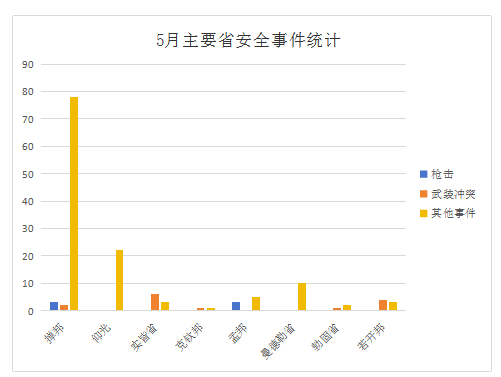
Figure 4: Comparison of Major Security‑Incident Counts: May versus April