Analysis on Nigeria’s Social Security Situation
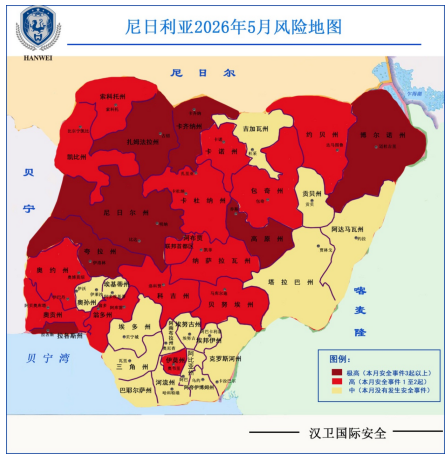
Based on monitoring reports from Hanwei International’s West‑Africa Security Officers and comprehensive media coverage, a total of 59 security incidents were recorded across Nigeria in May 2026. These incidents killed 155 civilians and 35 military‑police personnel, with at least 145 abductions reported. Major incident categories included armed assaults and abductions, military counter‑insurgency operations, and public‑safety accidents. Compared with the previous month, the number of security incidents dropped by 19, fatalities fell by 194, and abductions decreased by 224. Analysis shows that May saw a substantial decline in security‑incident frequency, casualties and abduction numbers, marking an overall improvement in the security landscape. Nevertheless, tensions escalated during the Eid al‑Adha observance; in particular, a surge in school abductions sparked widespread public concern over campus security in Nigeria. In response, Nigerian President Tinubu, in his Children’s Day statement on 28 May 2026, pledged full‑scale efforts to rescue abducted students and teachers, and to expand implementation of the Safe Schools Initiative. Measures include updating school‑vulnerability mapping, deploying rapid‑response communication systems, refining monitoring mechanisms, and strengthening community early‑warning frameworks. In May, northeast, central and north‑central Nigeria faced extremely high security risks, while remaining regions registered moderate‑to‑high risks.
I. Comprehensive Analysis of Security Incidents
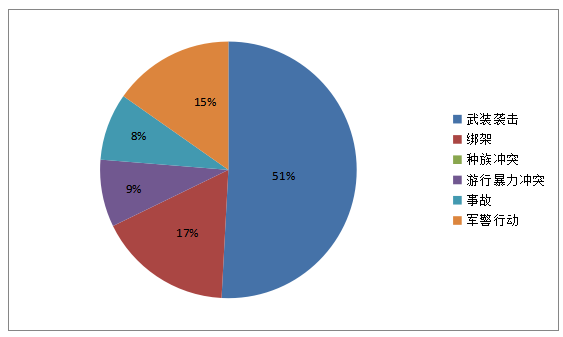
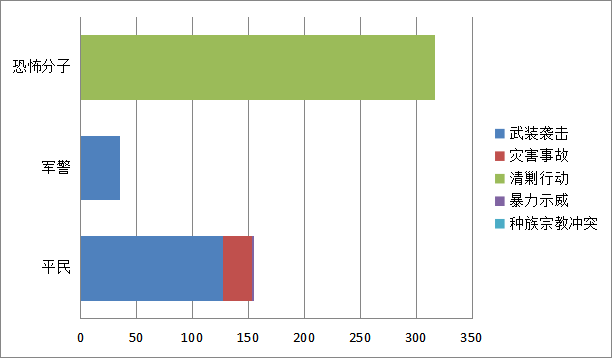
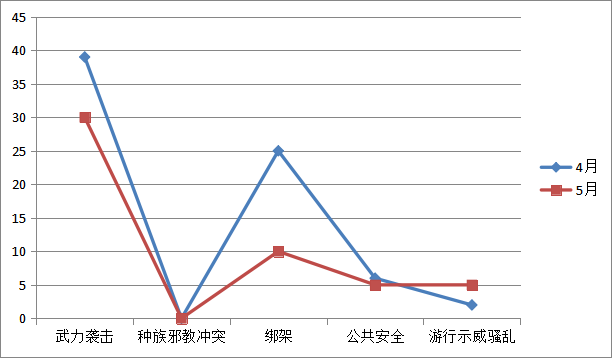
The 59 recorded security incidents in May comprised 30 armed assaults (50 %), 10 armed abductions (16 %), 5 public‑safety incidents (8.46 %), 9 military counter‑insurgency operations (15 %), and 5 demonstrations‑turned‑violence events (8.4 %). Collectively these events caused 507 fatalities and at least 145 abductions. Among the fatalities were 155 civilians, 35 military‑police members, and 317 slain terrorists. No ethnic or cult‑clash incidents were documented this month. Key features of the overall security situation are outlined below:
(I) Extremely High Security Risks in the Northeast, Central and North‑Central Zones
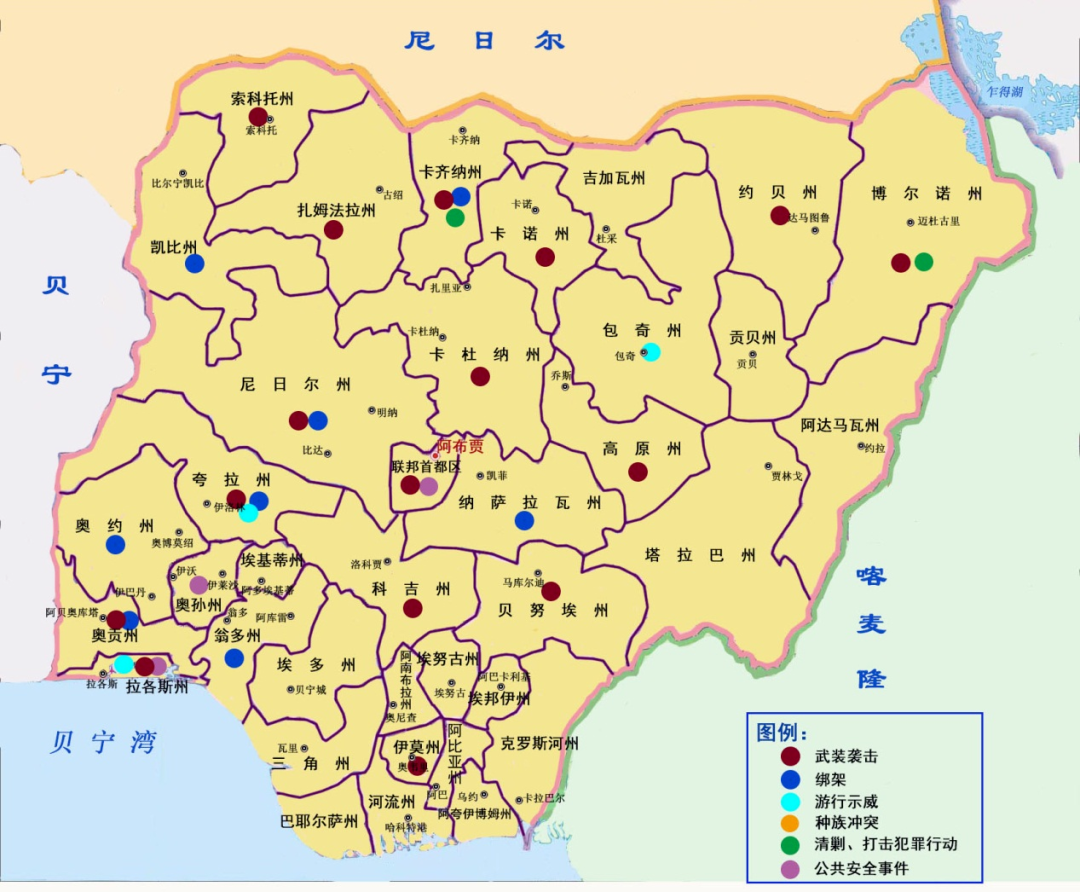
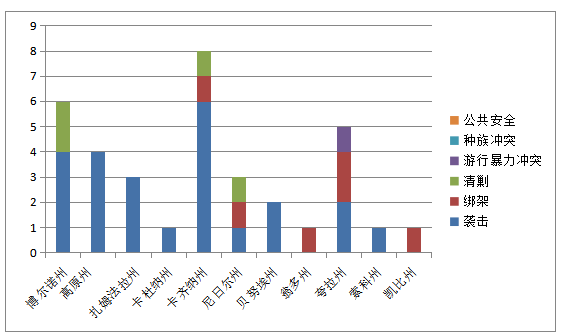
In May, security incidents were concentrated in Borno State in the northeast; Plateau and Kwara States in central Nigeria; and Katsina State in the north‑central zone. Zamfara and Niger States in the mid‑west and Lagos State in the southwest also qualified as high‑risk areas. Katsina State registered the highest risk level, with 8 security incidents (predominantly armed assaults and abductions), representing an increase of 3 incidents month‑on‑month, yielding 61 fatalities and 2 abductions. Borno State in the northeast recorded 6 incidents, mostly armed assaults, causing 36 deaths. Meanwhile, threats issued by the Boko Haram terrorist group operating in Borno State continued to unfold. On 14 May, Boko Haram militants released a roughly 30‑second video showing the execution of some abductees from the Ngoshe community within the Gwoza Local Government Area of Borno State. In the preceding month, a Boko Haram faction had issued a 72‑hour ultimatum to the Nigerian Government, threatening to execute 416 detainees unless a 5‑billion‑naira ransom was paid. To date, the Nigerian Government has made no official statement on this matter; the trajectory of this case will constitute a major factor shaping regional security.
Hanwei International’s West‑Africa Security Officers issued two security alerts in May. The 14 May advisory noted that Nigeria’s overall security environment remained complex and severe, with persistent theft, robbery, abduction, terrorist attacks and assorted public‑order offences. During Eid al‑Adha (27‑28 May 2026), religious gatherings, festival crowds, human mobility and transportation nationwide rose markedly. Large‑scale worship services and market activities in some localities could further elevate public‑order and traffic‑safety risks. The 31 May alert warned that criminal gangs planned to kidnap Chinese‑enterprise personnel engaged in road‑construction projects in Oyo and Kwara States. Chinese‑invested enterprises and individuals operating in these areas were advised to reinforce security safeguards.
Figure 1: Schematic Distribution of May Security Incidents
Table 1: Statistics of Security Incidents in Key Regions, May
(II) Reduction in Armed Assaults and Abductions
In May, 40 armed assault and abduction incidents took place across Nigeria, leaving 163 dead and 145 abducted. Incident volumes, fatalities and abduction counts all dropped substantially compared with April: incidents down by 24, fatalities down by 161, abductions down by 224.
Analysis identifies two salient characteristics. First, security deterioration coincided with Eid al‑Adha, a major Nigerian religious holiday historically associated with heightened security threats. Terrorist organisations have repeatedly staged attacks during major religious festivals such as Eid al‑Fitr and Eid al‑Adha to sow panic and provoke religious communities. On 25 May, the Nigerian military issued a pre‑Eid‑al‑Adha security warning, stating that Boko Haram and Islamic State West Africa Province (ISWAP) planned bombings in densely‑populated northeast locations on 28 May. Terrorists might carry out sporadic civilian‑targeted strikes in crowded venues using suicide bombings and improvised explosive devices. Accordingly, the military boosted reconnaissance and surveillance over the holiday period and conducted joint patrols alongside national‑security agencies, civilian joint‑task‑force units and community‑vigilance groups to safeguard residents.
Second, school‑targeted abductions surged. Five armed assaults and abductions against educational institutions occurred in May, killing 2 people and abducting 96 students and teachers. At 21:00 on 6 May, armed militants raided the Gudi campus of the Keffi site of Nasarawa State University, abducting 6 students. On 8 May, Olabisi Onabanjo University in Ogun State suffered another armed assault; students’ mobile phones, vehicles and other valuables were looted. On 15 May, three schools within the Orire Local Government Area of Oyo State were attacked, killing at least 2 people and abducting 48 students and teachers. Militants released a video on 17 May showing the execution of one teacher, triggering public alarm. On 17 May, a primary school in the Askira‑Uba and Chibok districts of Borno State came under armed attack, and 42 children were abducted. These grave school‑abduction incidents drew intense attention from the Nigerian Government and society at large. On 30 May, Nigerian President Bola Ahmed Tinubu approved the recruitment of 1 000 forest‑ranger personnel in Oyo State and deployed a specialised security team to rescue students and teachers abducted from the three schools in Orire Local Government Area. Meanwhile, the Nigeria Union of Teachers (NUT) directed all public‑primary‑and‑secondary‑school teachers in Oyo State to commence an indefinite strike starting 1 June 2026 in protest against persistent abductions of teachers and students in the state.
Furthermore, the United States Commission on International Religious Freedom (USCIRF) released a May report titled Non‑State Perpetrators of Religious‑Freedom Violations in Nigeria: Fulani Militants. It estimates that approximately 30 000 Fulani militants are active within Nigeria, fuelling frequent violent assaults across the Middle‑Belt and southern regions. Operating in clusters ranging from 10 to 1 000 fighters, these militants conduct night‑time raids on vulnerable rural communities, deploying motorcycles, automatic firearms and machetes to spread terror and force residents to flee their homes. At least 1.3 million people in the Middle‑Belt have been internally displaced as a result.
(III) Nigeria‑US Military Cooperation Enters Operational Phase
In May, Nigeria‑United States military ties moved beyond intelligence‑sharing into live‑operational collaboration, with multiple joint counter‑militant strikes. In February this year, U.S. forces completed the deployment of roughly 200 troops together with MQ‑9 Reaper drones in Bauchi State, Nigeria. Early in May, Nigeria’s Defence Headquarters announced the official inauguration of the Defence‑Industry Technical Working Groups (DITWGs), pursuant to the 2026 Nigeria‑United States Defence‑Cooperation Roadmap. This regularised collaborative framework will deepen bilateral military‑to‑military ties to jointly address counter‑terrorism and regional‑security challenges. Mid‑May, Nigerian and U.S. forces conducted joint counter‑terrorism operations in northeast Nigeria, killing 175 Islamic State extremist fighters. According to Nigerian‑military statements, these combined air‑ground strikes destroyed multiple Islamic State checkpoints, weapons‑storage sites and logistical hubs, and eliminated several senior Islamic State commanders. On 30 May, under the framework of Operation Hardin‑Kai, the Nigerian military together with United States Africa Command carried out airstrikes in Borno State, killing 21 suspected ISWAP militants.
(IV) Multiple Casualties from Public‑Safety Incidents
In May, incomplete statistics recorded 5 major public‑safety incidents in Nigeria that killed 26 people, chiefly traffic collisions and building collapses. On 10 May, an accident at the Eruku Bridge along the Abeokuta‑Lagos highway caused no fewer than 11 fatalities. On 16 May, a building collapsed in Durumi Area 3, Abuja, killing at least 5 persons.
Lassa‑fever outbreaks persisted across multiple Nigerian states in May. Latest reports from the Nigeria Centre for Disease Control (NCDC) indicated that as of 10 May, 5 034 suspected Lassa‑fever cases, 793 confirmed cases and 204 deaths had been cumulatively reported across 108 local‑government areas in 23 states, yielding a case‑fatality rate (CFR) of 25.7 %. Compared with April, suspected cases rose by 1 032 and confirmed cases increased by 108.
Additionally, an Ebola outbreak in Central Africa showed spreading tendencies, exposing Nigeria to substantial importation risk. The NCDC noted that although no Ebola cases had yet been confirmed domestically, overall import‑risk was assessed as “high”. Contributing factors included ongoing regional transmission, frequent cross‑border population movements in affected zones, and clinical‑symptom overlap between Ebola and locally‑endemic illnesses such as Lassa fever. The agency graded import‑and‑transmission risk across Nigeria into three tiers. Nine states including Abuja, Lagos, Kano and Borno were designated high‑risk due to international airports, seaports and land‑border crossings sustaining heavy human and commercial traffic. Twelve states including Ogun, Nasarawa and Kaduna fell into the medium‑risk category; the remaining states constituted baseline‑risk jurisdictions. On 25 May, the Lagos State Government stated that emergency‑response and disease‑surveillance systems were fully activated to address potential health threats. State authorities maintained close liaison with port‑health services at Murtala Muhammed International Airport and border‑entry officials for land and maritime points, alongside the Federal Ministry of Health, Federal Airports Authority of Nigeria (FAAN), NCDC, the Nigerian Institute of Medical Research (NIMR) and other relevant bodies. All flights originating from East and Central Africa now receive enhanced public‑health screening. Residents planning travel to the Democratic Republic of the Congo or Uganda, or persons with close contact with affected individuals who develop symptoms, are advised to seek support via designated emergency channels.
(V) Sustained Military Counter‑Insurgency Operations
In May, Nigerian military‑police forces intensified counter‑terrorist campaigns, concentrating clearance operations across the northeast, central and north‑central zones. Large numbers of militants were killed, and 221 abductees were rescued. On 26 May, the Nigerian military announced that its forces had killed 317 terrorists, arrested 314 suspects and freed more than 221 abductees in May counter‑terrorism missions. Operations were executed jointly by air, land and maritime components in coordination with other security agencies. Beyond militant fatalities, forces seized 93 weapons, dismantled 3 illegal refineries and recovered 21 910 litres of stolen petroleum products. In the northeast, Operation Hardin‑Kai troops eliminated 73 insurgents, detained 159 suspects and rescued 112 civilians. In the northwest, Operation Vansanyama forces conducted air‑land assaults, killing 24 terrorists, arresting 13 suspects and freeing 22 abductees. In the south, Operation Delta‑Safe stepped up anti‑oil‑theft enforcement, arresting 14 suspects, dismantling multiple illegal‑refinery sites and intercepting large volumes of stolen petroleum. In the southeast, Operation Udoka units apprehended 60 suspects and rescued 18 victims.
Table 2: Comparative Breakdown of Security Incident Categories, May Table
3: Fatalities Categorised by Victim Profile, May Table
4: Comparison of Major Security‑Incident Counts: May versus April
II. Risk Warnings and Mitigation Recommendations
Table 5 Near‑Term Social‑Security Risk Alert for Nigeria
风险等级及评分 子等级 地区及城市 危险源 极高风险(17‑25 分)Extremely High Risk (17‑25 pts)Tier 1 Ⅰ 级(23‑25 分)Level Ⅰ (23‑25 pts) 博尔诺州,扎姆法拉州等东北、西北部Borno State, Zamfara State and other Northeast‑North‑West jurisdictions “博科圣地” 极端组织恐怖袭击,种族仇杀,军事清剿行动Boko Haram terrorist attacks, ethnic vendettas, military counter‑insurgency operations Ⅱ 级(20‑22 分)Level Ⅱ (20‑22 pts) 卡杜纳等 “中部地带” 诸州,南部产油地区诸州Middle‑Belt states including Kaduna, southern oil‑producing states 种族冲突,“尼日尔河三角洲解放运动” 武装组织,绑匪劫持等Ethnic clashes, Movement for the Emancipation of the Niger‑Delta militants, kidnapper hostage‑taking Ⅲ 级(17‑19 分)Level Ⅲ (17‑19 pts) 河流州等南部地区近海(几内亚湾)Offshore waters of southern states such as Rivers State (Gulf of Guinea) 海盗袭击,武装绑架,偷盗等Pirate attacks, armed abductions, theft 高风险(10‑16 分)High Risk (10‑16 pts)Tier 2 Ⅰ 级(15‑16 分)Level Ⅰ (15‑16 pts) 奥贡州,奥约州,奥孙州,阿南布拉州等地Ogun, Oyo, Osun, Anambra States etc. 劫持,零星恐怖袭击等Hostage‑taking, sporadic terrorist strikes Ⅱ 级(13‑14 分)Level Ⅱ (13‑14 pts) 阿布贾,拉各斯等Abuja, Lagos etc. 抗议游行,武装绑架,偷盗等Protests and demonstrations, armed abductions, theft Ⅲ 级(10‑12 分)Level Ⅲ (10‑12 pts) — — 中等风险(5‑9 分)Moderate Risk (5‑9 pts)Tier 3 Ⅰ 级(8‑9 分)Level Ⅰ (8‑9 pts) — — Ⅱ 级(5‑7 分)Level Ⅱ (5‑7 pts) — — 低风险(1‑4 分)Low Risk (1‑4 pts)Tier 4 Ⅰ 级(3‑4 分)Level Ⅰ (3‑4 pts) — — Ⅱ 级(1‑2 分)Level Ⅱ (1‑2 pts) — —
Note: Internal security‑risk assessment by Hanwei International
Given Nigeria’s complex social environment and high‑risk security assessment, the following protective measures are recommended:
Full‑time security coverage for travel. Remote rural areas have limited police presence and poor road infrastructure; security‑force response times to violent crime and civil unrest are often protracted. Chinese‑invested enterprises should obtain timely, up‑to‑date local‑security intelligence, complete site‑specific risk assessments prior to travel, and deploy security escorts for field movements.
Mitigate flood and extreme‑heat hazards. Early‑May warnings issued by the Nigerian Meteorological Service noted that compacted dry topsoil limits rainwater infiltration; early‑arriving intense rainfall exposed 19 states to flash‑flood risk. Highest‑risk jurisdictions included Zamfara, Nasarawa, Lagos, Ogun, Akwa‑Ibom and River States. Flash floods may trigger secondary hazards: submerged roadways, transport disruption, damage to housing and farmland, blocked drainage and water‑borne disease outbreaks. Separately, the Federal Ministry of Environment and meteorological authorities issued heat alerts. Parts of northern, central and southern Nigeria are projected to hit 40‑45 °C. Niger, Sokoto, Kano, Borno and Adamawa States face peak heat stress, raising risks of heat exhaustion, heat‑stroke and meningitis outbreaks. Chinese‑organisations and personnel in Nigeria are urged to monitor disaster developments and finalise emergency preparedness.
Effective risk avoidance. Most attacks occur in the northeast and north‑central zones, notably central Maiduguri (Borno State), inter‑urban transport corridors, Niger‑border districts and Zamfara State. Kaduna State and Abuja have recently seen frequent security incidents. If caught in a terrorist attack, comply with official instructions and contact contracted security providers for emergency assistance. Install CCTV at compounds, shops, warehouses and residences. Fortify camps with trenches, high perimeter walls, barbed wire, anti‑ram barriers, buffer zones and alarm systems; augment military‑police security detachments and expand defensive perimeters. Avoid lingering near potential armed‑attack targets: government‑security installations, landmark buildings and religious sites. Minimize dwell‑time in high‑exposure public spaces across Nigeria, in particular: the northeast, religious‑festival venues, multi‑ethnic mixed zones, high‑crime locations (including highways and pirate‑prone Gulf‑of‑Guinea waters), oil‑and‑gas infrastructure, government/military compounds, diplomatic missions, worship sites, schools, marketplaces, refugee settlements and transport hubs.